Sample Content
Navigated spine surgery
Navigated spine surgery is like GPS for surgeons – a system to help them plan a route using a specialized map to arrive at a destination. Just like a car can do for a driver, a surgical navigation system is designed to help your doctor perform your surgery. The surgeon can use a navigation system to help plan and execute your surgery just as you would plan and make your drive across town.
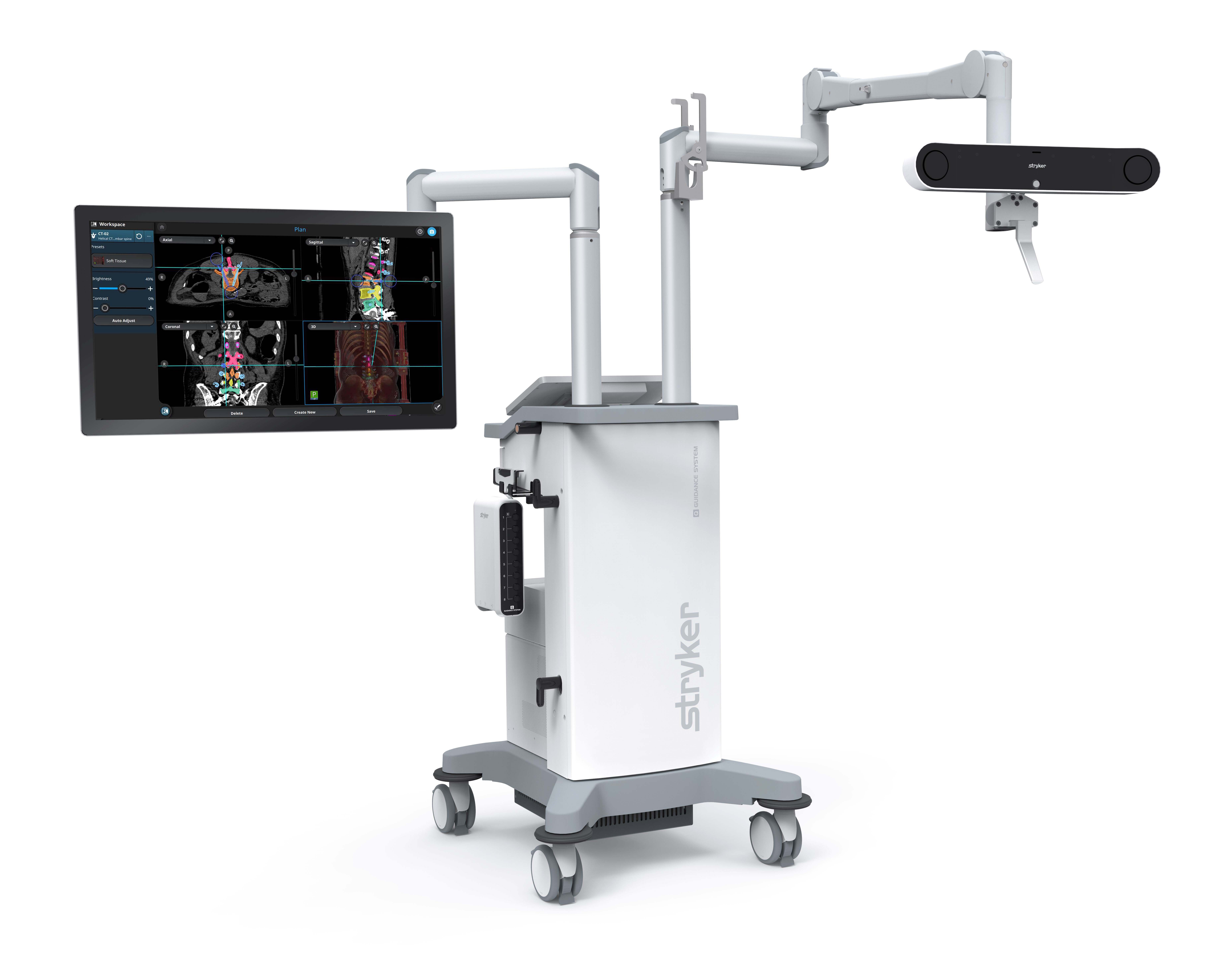
Navigated spine surgery can be used to help surgeons place implantable screws during the following procedures:
- Spinal fusion
- Spinal decompression
- Scoliosis correction and spinal deformities
- Tumor removal
- Vertebroplasty
- Minimally invasive spine surgery (MIS)
- Revision spine surgery
Navigated spine surgery happens in five important stages. These stages include:
- Imaging
- Surgical planning
- Intra-operative navigation
- Use of surgical instruments and placement of implants called pedicle screws
The imaging process begins with the patient undergoing a CT or MRI scan. These scans provide detailed images of the patient’s spine, allowing the surgeon to see the anatomy and any abnormalities.
The imaging data is then uploaded to the navigation system’s computer. Special software processes the images to create a virtual 3D model of the patient’s spine, which serves as the foundation, or “map,” for surgical navigation.
Before making an incision, the surgeon must accurately align the navigation system with the patient’s anatomy. This process, called registration, involves the use of patient tracking devices placed on the patient’s body or attached to specific vertebrae, or spinal bones. These markers allow the navigation system to match the virtual 3D image with the patient’s actual anatomy.
Surgical instruments are equipped with trackers that communicate with the navigation system. Before starting the procedure, these instruments and trackers are calibrated to ensure their precise tracking ability and connection to the navigation system.
As the surgery progresses, the navigation system continuously tracks the position and orientation of the surgical instruments in real-time, providing the surgeon with accurate feedback.
Once the registration and calibration are complete, and the navigation system is positioned for the surgery, the surgeon is ready to begin.
During the surgery, surgeons will use navigated instruments to help them perform the planned procedure. The navigation system provides visualization that can help the surgeon guide the instruments to the intended targets while avoiding critical anatomical structures.
In some cases, it may be necessary to remove some bone from a vertebral segment to help relieve pressure on the spinal canal or exiting nerve roots. Bone removal can also be done to help realign the spine into the proper position if there is a spinal deformity present. This part of the procedure is called spinal decompression.
Once the screws are placed and spinal decompression is performed, metal rods are used to connect the screws together. The rods and screws are designed to help prevent the vertebrae from moving during the healing period, which is called spinal fusion.
During screw insertion, the navigation system provides visualization to surgeons helping them ensure that all instruments are on the correct trajectory, are accurately reaching the planned targets, and allowing them to place the screws in an optimized position.
The surgeon will perform a final check at the end of the surgery to confirm the placement of all implants and adequate correction of any deformity.
Once the surgeon has successfully completed the procedure, he or she will remove the instruments from the surgical site. The incision is closed using sutures or surgical staples.
While several steps may vary depending on the type of procedure the surgeon is performing, navigated spine surgery will always include imaging, surgical planning, intra-operative navigation, screw placement, and closing the incision.
Disclaimers
As with any surgery, spinal surgery carries certain risks. Your surgeon will explain all the possible complications of the surgery, as well as side effects.
The information presented is for educational purposes only. Stryker is not dispensing medical advice. Please speak to your doctor to decide if spinal surgery is right for you. Only your doctor can make the medical judgment regarding which products and treatments are right for your own individual condition.
As with any surgery, spinal surgery carries certain risks. Your surgeon will explain all the possible complications of the surgery, as well as side effects. Each spinal surgery patient will experience a different post-operative activity level, depending on his/her own individual clinical factors. Your doctor will help counsel about how to best maintain your activities in order to recover properly from your surgery. Such activities include not engaging in high-impact activities that could de-stabilize any instrumentation that may have been implanted.
SPINE-GSNPS-OTHD-105530