Sample Content
Mako Shoulder replacement
We understand that knowing what to expect from your joint replacement experience is important to you. As you read through this material, please reach out to us to discuss if you have additional questions.
Each patient is unique and can experience joint pain for different reasons. It’s important to talk to us about the reason for your shoulder pain so you can understand the treatment options available to you. Pain from arthritis and joint degeneration can be constant or come and go, occur with movement or after a period of rest or be located in one spot or many parts of the body. It is common for patients to try medication and other conservative treatments to treat their shoulder pain. If you haven’t experienced adequate relief with those treatment options, you may be a candidate for Mako Shoulder replacement, which may provide you with relief from your shoulder pain.
How Mako Shoulder works
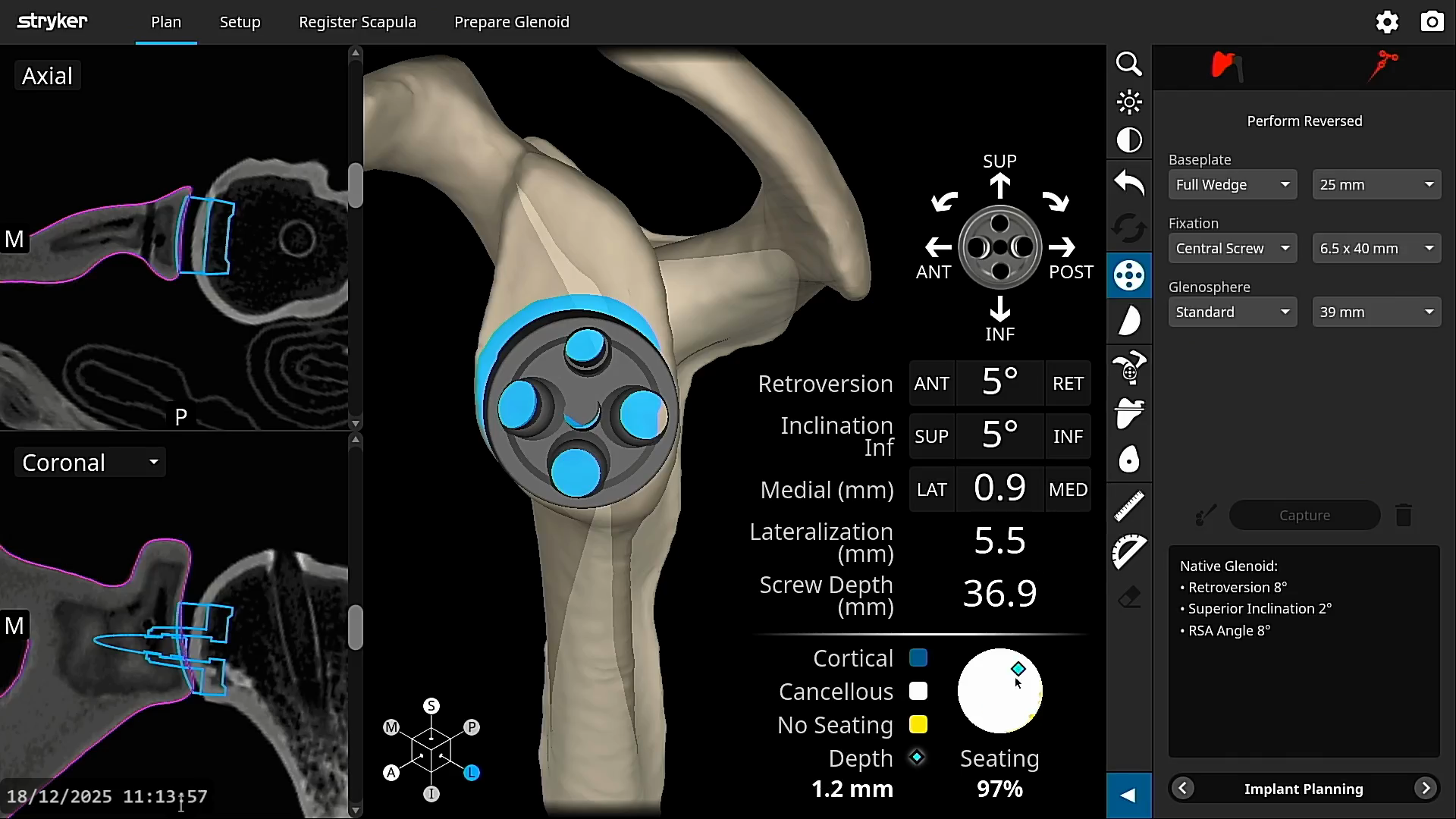
Mako is an innovative solution for many suffering from painful arthritis of the shoulder.
Scan. It all starts with a CT scan so your surgeon can know more about your anatomy.
Plan. The CT scan is used to create a 3D CT-based model of your shoulder. Your surgeon uses this 3D model to create a personalized surgical plan and assist your surgeon in performing your shoulder replacement procedure.
Mako Can. In the operating room, your surgeon follows your personalized surgical plan while preparing the bone for the implant. The surgeon guides Mako’s robotic arm within the predefined area, and Mako’s AccuStopTM technology helps the surgeon stay within the planned boundaries that were defined when the personalized preoperative plan was created.
It’s important to understand that the surgery is performed by an orthopaedic surgeon, who guides Mako’s robotic arm during the surgery. Mako does not perform surgery, make decisions on its own or move without the surgeon guiding it. Mako also allows your surgeon to make adjustments to your plan during surgery as needed.
Mako Shoulder replacement for primary reverse shoulder surgical procedures is intended for patients who suffer from noninflammatory or inflammatory degenerative joint disease (DJD). Some forms of DJD include osteoarthritis (OA), post-traumatic arthritis, rheumatoid arthritis (RA) and avascular necrosis (AVN).
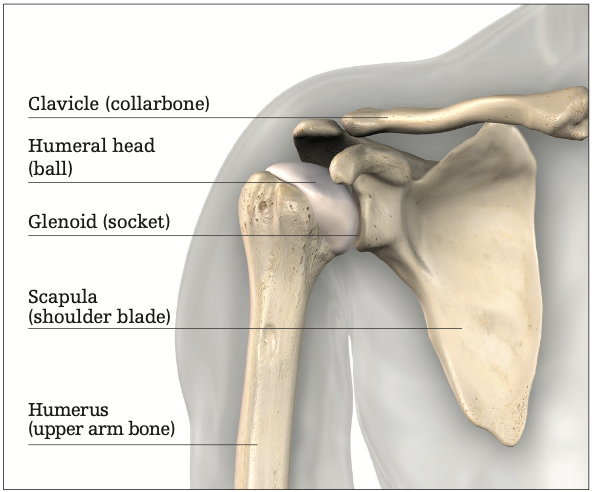
Healthy shoulder
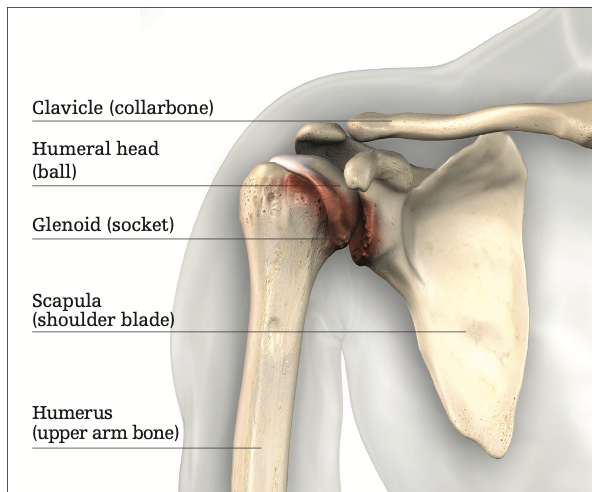
Shoulder with arthritis
IMPORTANT INFORMATION
Reverse shoulder joint replacement is intended for use in individuals with a functional deltoid muscle, grossly deficient rotator cuff, and pain disabled by one or more of the following:
- Non-inflammatory degenerative joint disease (i.e. osteoarthritis) and avascular necrosis
- Pseudoparalysis or anterior superior escape
- Rotator cuff tear
- Correction of functional deformity
- Post-traumatic arthritis
- Revisions or fractures of the humeral head where adequate fixation can be achieved and adequate bone stock remains
Shoulder joint replacement surgery is not appropriate for patients with certain types of infections, any mental or neuromuscular disorder which would create an unacceptable risk of device stability, device fixation failure or complications in postoperative care. Additionally, shoulder joint replacement surgery is not appropriate for patients whose anticipated activities would impose high levels of stress on the shoulder.
Like any surgery, shoulder replacement surgery has potential risks. Some may occur during surgery, such as bleeding, bone fracture, injury to nearby blood vessels or nerves, or other surgical or anesthesia-related complications. Other risks may occur during or after surgery and can include pain or stiffness, infection, blood clots, changes in blood pressure or heart rhythm, lung problems such as pneumonia or emboli, stroke or heart attack, and death.
Implant related risks which may lead to a revision or removal of the implant include dislocation of the implant, loosening or wear of the implant, bone fracture, nerve damage, heterotopic bone formation (abnormal bone growth in tissue), wear or breakage of the implant, metal and/or foreign body sensitivity, soft tissue imbalance, osteolysis (localized progressive bone loss), audible sounds during motion and reaction to particle debris.
Being overweight, manual labor activities, some sports activities, patient age, activity level, certain medical conditions, alcohol or drug addiction, and mental disorders may be associated with increased risks. Shoulder joint implants may not provide the same feel or performance characteristics experienced with a normal healthy joint.
The information presented is for educational purposes only. Stryker is not dispensing medical advice. Please speak to your doctor to decide if shoulder joint replacement surgery is appropriate for you. Only your doctor can make the medical decision about which products and treatments are right for your own individual condition. As with any surgery, joint replacement carries certain risks. Your surgeon will explain all the possible complications of the surgery, as well as side effects. Additionally, the lifetime of a joint replacement is not infinite and varies with each individual. Also, each patient will experience a different post-operative activity level, depending on their own individual clinical factors. Your doctor will help counsel you about how to best maintain your activities to potentially prolong the lifetime of the device.
Stryker Corporation or its other divisions or other corporate affiliated entities own, use or have applied for the following trademarks or service marks: AccuStop, Mako, Stryker. All other trademarks are trademarks of their respective owners.
JR-MAKSH-OTHW-2955502
Copyright © 2026 Stryker